


We help companies position their brand ahead of their peers, in relevant publications and their chosen readership channels.
We get you into the industry conversation and help your brand shape the debate with incisive thought leadership and original opinions.
LINKS TO SOME EXAMPLES OF ARTICLES PUBLISHED FOR CLIENTS ARE BELOW
Please note you may need the relevant subscription to read the full text.

History repeats itself but it doesn’t read like this
The risk to shipping portfolios from the energy transition deserves to be better understood than by making uncorrelated comparisons
Are shipowners and their financiers complacent about the risks to their business from the energy transition? The authors of a new report from University College London think so, though to make their case they choose two unlikely comparators.
Using the bankruptcy of Hanjin Shipping in 2016 and the collapse of the German KG system in 2009 to highlight the risks, UCL argues that banks still have form when it comes to underestimating the combined impact of policy, market shifts and technology developments.
At the report’s heart is the startling assertion that because climate risk is new, banks fail to understand it. In fact, the underlying financial risks are anything but new; banks and shipowners have established methodologies for analysing precisely these risks.

Dry bulk volatility is no longer the risk: it’s the business model
For decades, the dry bulk freight market could be understood through a relatively straightforward framework. Freight rates rose and fell with Chinese steel production, agribulk-related seasonality, fleet growth and the larger cycles of global trade. Volatility was accepted as part of the business, but it reflected this cyclicality and was, to a degree, predictable.
Today’s freight market is increasingly shaped not just by traditional shipping fundamentals, but by geopolitics, climate disruption, infrastructure bottlenecks and financial market behaviour.
For example, dry bulk freight rates have strengthened significantly through the first half of 2026, supported by resilient Capesize demand and tighter effective vessel supply – rather than because of stronger cargo growth.
The point of difference is that freight rates no longer simply reflect cargo demand. Instead, they reflect disruption.
-
The digital paradox: overcoming resistance to business transformation
Why do some companies struggle with digital transformation? The answer is pretty clear if we trace the evolution of vessel operations over as little as the last 20 years.
At that time ships were much more heavily-crewed, but many operators progressively slimmed down crew sizes as they found they could manage with fewer seafarers and still remain compliant with minimum manning levels.
There was no digital transformation taking place – the loss of the radio operator in particular seemed to signal the opposite – but the burden of work on the crew continued to increase. A vessel might go from 25 or 30 crew to 15 or 20 which meant those onboard often had to do more work, but more quickly and under greater pressure.
-
How to capture the opportunity of shipbuilding’s golden age
Shipbuilding in Canada is poised to enter a golden age but the new approach to design, construction and sustainment it calls for won’t be realized if the industry maintains its traditional posture of moving slowly on every decision.
This golden age marks a structural break from the past, one that will see the industry move beyond boom–bust cycles driven by episodic procurement towards sustained, planned production.
Modernized yards and a renewed focus on industrial capability can position shipbuilding as a platform for security, resilience and innovation.
Durable demand drivers, based on multi-decade federal commitments, Arctic sovereignty and global naval recapitalization are aligning to make Canada’s shipbuilding industry a national strategic asset.
-
Why port readiness for alternative fuels is stalling
The maritime energy transition was always going to be expensive and difficult for shipping and ports alike. The seismic shift from a single fuel type to multiple possible fuels, for example; LNG, methanol, ammonia and hydrogen – means progressive investment in infrastructure as supply grows and owners consolidate around a preferred fuel type.
The majority of the shipping industry continues to express a desire and a willingness to continue the process of decarbonization. The long-term goals set out by the International Maritime Organization (IMO) in its Net Zero Framework hinge on creating a level playing field for global regulation and providing a signal to green fuel producers that demand would move toward greater predictability.
The decision to delay adoption of the NZF for at least one year creates multiple impacts on owners, managers and charterers. But for the world’s ports – those expected to support the energy transition as points of supply – the decision also creates challenges that will ripple through the sector.
-
Don’t mistake AI’s ambitions for shipping’s reality
Shipping loves technology, it just struggles to understand it at scale. Those old enough to remember the impact the dotcom boom (and bust) had on shipping have all the evidence they need of what happens when traditional industries get a glimpse of a high-tech future.
If 2025 was the year of AI hype in shipping, strap in for what promises to be more of the same in 2026. Listen to its promoters and AI has the potential for application in everything from ship design to broking, marine insurance to cargo handling and beyond.
So far, this has evidenced itself mostly in the people who seek to lead the industry talking about its importance as a differentiator. Listen carefully and what you hear more clearly is how they plan to use it to make efficiency savings and increase automation, rather than actually do the big things differently.
Still, it’s exciting to hear about what AI might do, though whether that is enough to justify the prominence in current discourse or the corporate valuations of the big providers is another question entirely.
Good as AI is at writing your report, making funny videos and helping you find a pharmacy in an unfamiliar city, it is a long way from being central to the business of operating ships, trading commodities or running a port.
The reason has nothing to do with technology and everything to do with business models. In shipping, a safe and profitable voyage is the over-riding aim. It works on trust and relationships and ultimately, it’s a transaction that relies on experience, skill and intuition in order to capture the market upside.
AI is already able to present some of these characteristics as if it actually possessed them, but the main difference between shipping and AI is that tech companies simply aren’t focussed on making money. They don’t need to be.
Their reason to exist is founded on disrupting enough of the global economy to one day be able to create value for their investors. Navigating disruption in order to deliver value is something that shipping companies quietly achieve in the real world, every day.
So yes, let’s listen to the prophets in 2026 and prepare ourselves for a future in which AI becomes more embedded in processes that it can do faster, though not always better, than humans.
But let’s listen harder still for some evidence that AI as currently envisaged is anywhere near being a game-changer, or that those who claim it to be so can demonstrate an understanding of the industry they are attempting to disrupt. After all, real world events appear to be doing that well enough by themselves.
-
Negative to Neutral: shipping in a non-aligned world
It’s been a turbulent 12 months in the shipping markets, characterised by a great deal of nervous excitement around both trade and the global economy. And though we like to approach the year’s turn with messages of hope and optimism, caution appears to be the appropriate posture.
This doesn’t mean we should see only doom and gloom, there have been plenty of opportunities along with the volatility this year and we’ve previously advocated for trading the market not the headlines, a strategy we’ll stick to in 2026.
So, what does feel different? Well, at the risk of making predictions we’ll come to regret it’s possible that 2026 sees the temperature cool in some of the world’s flashpoints and potentially a quieter political backdrop too.
But let’s make no mistake; we are in a different world commercially speaking and not necessarily a new one. In some sense, it feels like history is repeating itself or at least rhyming.
-
Five megatrends in geopolitics and shipping
The emergence of new political agendas, rapid technology development and the willingness of states to act against each other have all impacted national security and the world economy.
No-one should doubt that we are living in a world that has been radically re-shaped in the past decade.
The emergence of new political agendas, rapid technology development and the willingness of states to act against each other overtly and covertly, have all impacted the underpinnings of national security and the world economy.
For those whose business is understanding and managing risk on a global scale, the five topics here represent the most significant items on the risk register.
-
Shipping’s stark choice: invest in cleaner ships or pay a high price
For an industry that counts every dollar and cent, why are some shipowners apparently prepared to risk money on non-compliance with IMO 2020, and at the same time distance themselves from the funds they will need to build ships in future?
A mere six months before the start of the global sulphur cap, shipping is undergoing a bout of introspection rarely seen before. If the cap itself is cause for concern, then the unwillingness of some owners to take a proactive view on the changes necessary is surely an alarm bell.
-
Viewpoint: Good is not the enemy of the perfect fuel solution — and it’s the best place to start
Maritime decarbonisation is in a state of flux. Despite the positive message sent by member nations of the International Maritime Organization at the 80th session of the Marine Environment Protection Committee in July, plenty remains to be done to accelerate emissions reductions from shipping to meet IMO targets.
Much of the confusion sits around alternative fuels. We know the fuels we need are not all available yet in the required quantities. Some are in short supply; others do not exist in a usable form.
-
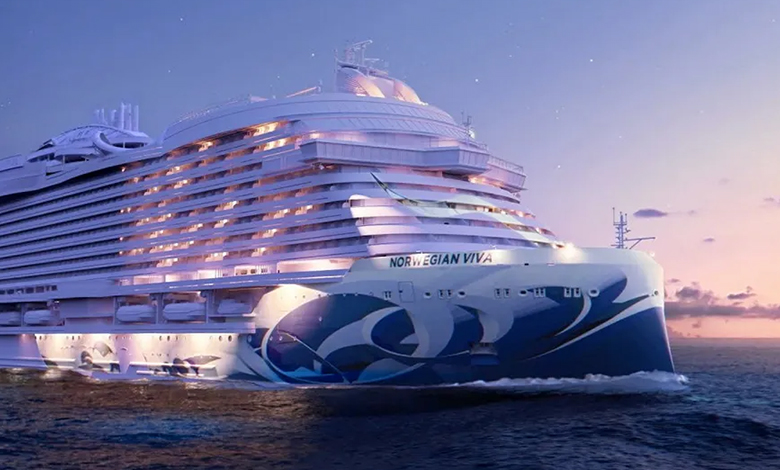
Norwegian Cruise Line’s $1.3bn methanol bet a ‘great signal’
Norwegian Cruise Line Holding’s €1.2bn ($1.3bn) investment in retrofitting ships to run on methanol is a sure sign that maritime views the alternative fuel as a viable way to meet pending carbon limits, an industry advocate said.
Norwegian has modified newbuilding contracts with shipbuilder Fincantieri so that the last four vessels in a six-ship Prima-class cruise ship order will be able to burn green methanol at the aforementioned additional cost.
-
Port and supply chain congestion puts carbon savings in holding pattern
Continuing congestion at the world’s major ports and supply chains makes it less likely that the maritime industry can move ahead with projects to promote just-in-time arrival as a carbon-cutting measure.
In normal times, just-in-time arrival can be used to plan voyages and optimise speed to coordinate vessel arrival with berth availability. It is seen as key to helping operators and port authorities reduce carbon emissions generated during the voyage and while ships wait for a berth.
-
From newbuilding nice-to-have to vessel lifecycle essential
The maritime industry is still assessing the long-term benefits of digital twins – not just for newbuilding projects – writes David Males, director of Business Development at SSI.
The concept of the digital twin and its potential benefits have become embedded in the maritime industry. But how far the concept has penetrated the collective industry mindset is less certain.
-
Are maritime hackers pushing at an open door?
At a time when armed gangs are attacking ships navigating in the Red Sea and the Black Sea is effectively a war zone, it may seem an exaggeration to assert that hacking is arguably the biggest current threat to business continuity in maritime.
However, the maritime industry’s transformation from a niche business, isolated by low bandwidth and bespoke applications, to a high-value target with political and economic significance has brought it unwelcome attention.
-
Ship crews reach out for support as Red Sea GPS spoofing climbs to danger levels
The spike in physical attacks against shipping by Houthi rebels in the Red Sea has been mirrored by an increase in jamming and spoofing of GPS signals, effectively removing position, navigation and timing information from the control of the ship’s navigators.
Examples have included vessels travelling at supersonic speeds or positioned on land, sometimes in circles surrounding targets that bad actors are trying to protect.
As well as reducing the vessel’s ability to navigate, these RF-cyber attacks can impact mandatory GMDSS safety services, potentially removing the ability of ships to send a distress call.
-
Don’t hold back on the switch to eLogs
A survey carried out for ABS Wavesight into usage patterns and adoption of eLogs returned some results that appear contradictory.
A ship’s logbook is not just a mandatory safety requirement; it is essential for understanding any sequence of events on a voyage including the operational status and decision-making processes on board vessels at critical times. Electronic logbooks (eLogs) are not new to the industry. The IMO has facilitated a transition to eLogs by endorsing their use under MARPOL since October 2020.
-
Why the 2025 dry bulk market looks like uncharted waters.
A combination of geopolitical risk and the continuing threat of violence could have direct impacts on the dry bulk market.
The Gulf of Aden and the Red Sea remain critical arteries for global dry bulk shipping. The impact of the continuing attacks on shipping making the transit are testament to the resilience of the industry and its ability to absorb shocks.
The seafarers onboard the ships at risk from Houthi missiles can hardly be expected to share such a positive take on events, of course. Hopes are once again high that some form of ceasefire can be brokered between Israel and Lebanon, potentially enabling one front of the devastating conflict to wind down.
-
Resilience, accountability, agility: the case for small independent dry bulk operators
The recent Geneva Dry conference saw shipowners converge in huge numbers to listen to panels on many matters of interest to the market across two days.
Among them, the risk management workshop raised interesting points about operational risk in dry bulk shipping. However, the characterisation by some of the speakers of smaller owners as inherently riskier or problematic – and predictions of their imminent demise – overlooks the essential role they play in today’s fragmented, performance-driven market.
At Sagitta Marine, we believe operational scale is no substitute for operational discipline. In particular we work to counter the false equivalency between smaller company size and higher risk.
The assertion that smaller owners or operators are automatically higher risk than larger ones ignores the reality that risk is a function of governance, transparency and operational rigour, not the dwt under management.
-
Computer says no. What happens if your fuel eu data submission doesn’t make the grade?
A recent industry conference saw a straw poll of delegates asked for their biggest challenge in regulatory compliance. The answer? Data collection of course.
But with the next phase looming of EU regulations, the challenge goes beyond collecting data and into making accurate, verifiable reports.
Twelve months ago, a tidal wave of incoming maritime emissions regulation saw shipowners scrabble to sign up to software platforms that promised to support their data collection and submission process. In many ways this was progress; it spelled the beginning of the end of the era of spreadsheet data collation.
-
Thinking fast and slow: why high-quality data demands the right foundations
Data continues to represent value in the pursuit of vessel energy efficiency, and as the value of actionable information increases, the focus is increasingly on using high-frequency sensors to drive decision-making.
As always in shipping, the truth is not quite so simple. The welter of information that high frequency sensors can provide creates an opportunity for applications that can work at this cadence. For the majority of the fleet, however, the emphasis is still on the ability to capture high-quality, low-frequency data and blend the two into a robust combination.
Low-frequency data is not just for simple analysis tasks. Used in conjunction with complex digital vessel models, it can provide high-quality insights that reflect the specifics of the ship being analysed.
-
Big shipping names meet for first time as part of Achilles transparency network
Representatives of major shipowners gathered for the first time during Nor-Shipping as part of their work with the Achilles trade transparency network.
Members, including Stolt-Nielsen, Odfjell and BW LPG, are taking a lead to strengthen responsible and resilient supply chains as part of the platform’s business advisory group, Achilles said.
-
The shipping industry’s long voyage toward supply chain transparency
A combination of tightening regulation and the trend towards ESG reporting are creating market pressure for supply chain due diligence and transparency across many sectors. The maritime industry is no different.
From ports and shipyards to suppliers, shipowners and operators, organisations are increasingly seeking to understand how their partners perform in terms of labour standards, human rights and environmental protection.
Vessel owners and operators in Norway and the European Union were some of the first to come under pressure from clients and investors to comply with ethical sourcing programmes and to report on labour practices and human rights in their supply chain. Now, interest is growing in the Middle East and Asia, especially where carriers are operating assets and moving cargo for western clients.
-
As tariffs loom, front-loading will be the key trend for US container trade
Shippers are likely to front-load imports but the full extent of the changes depends on willingness to follow-through on tariff threats, writes Daniel Richards, Associate Director, MSI
US container trade trends were in rude health in 2024, and the start of the second Trump administration will inherit a relatively favourable backdrop in terms of spending growth and inventory levels relative to sales, but it is likely that volume trends moving forwards are going to become increasingly driven by reactions to Trump’s actions on tariffs. Our headline takeaway is that tariff anticipation, in combination with the prospect of a further East Coast labour strike in January, is likely to extend a healthy period of US TEU import volumes further into the first half of 2025.
-
Disconnect: time-charters and the freight market
With vessel asset prices remaining stubbornly high and carrier earnings set to decline, investors may see the next two quarters as a jumping off point from the sector.
The policy and geopolitical backdrop to containership markets have yielded an evident impact on freight market dynamics, but for now both vessel time-charter rates and asset prices have barely budged. This disconnect between freight and time-charter market fortunes seems set to endure for much of this year at least.
-
IMO mid-term measures tipped to add 80% premium to bunker costs by 2035
Maritime Strategies International (MSI) has given an early indication of the impact that the International Maritime Organization’s recently agreed Net Zero Framework will have on the bunker market.
By extending the annual fuel consumption estimates calculated for 2024 through to 2035, and applying MSI’s forecasts for bunker prices, it is possible to project the future fuel costs for conventionally-fuelled ships alongside the projected IMO penalties. By this approach, the IMO’s penalties would be equivalent to an 82% premium on top of the fleet bunker costs by 2035 – almost $100bn for the 30,000 ships tracked in MSI’s database.